English
 Deutsch







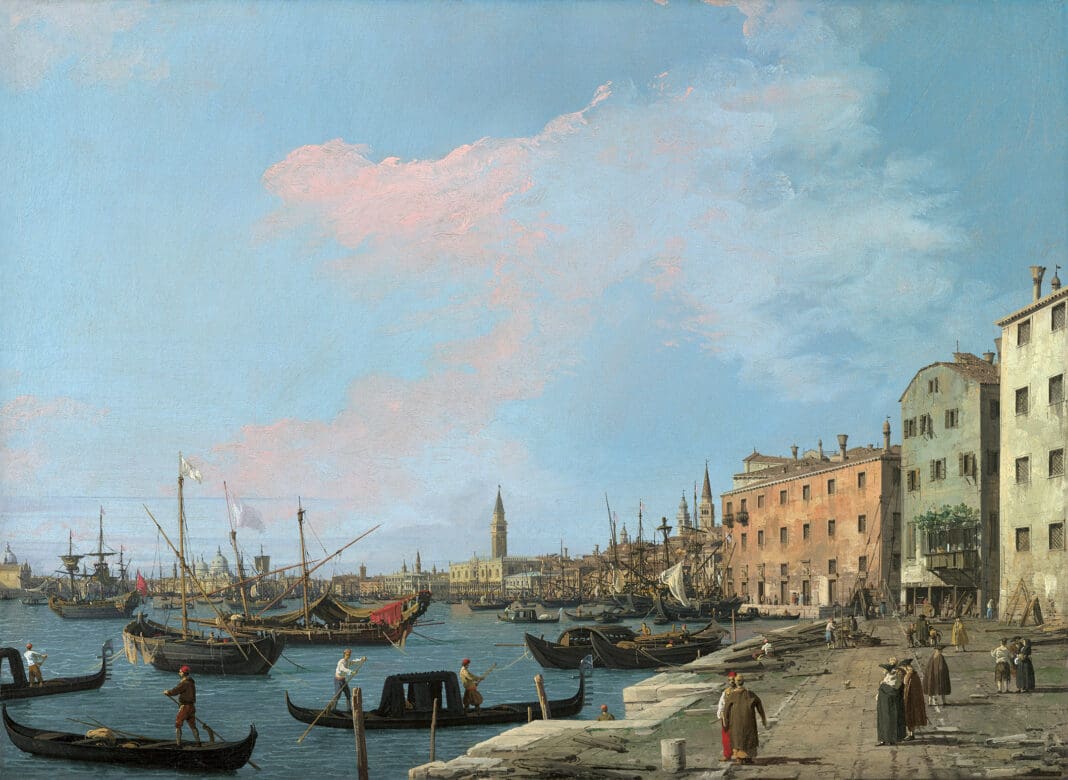
The exhibition “Canaletto & Bellotto” at the Kunsthistorisches Museum in Vienna (March 24–September 6, 2026) is dedicated to two of the most important veduta painters of the 18th century: Canaletto and his nephew Bernardo Bellotto. Using selected works, it traces the development of the Venetian cityscape and its dissemination throughout Europe. The exhibition illuminates not only the artistic techniques and stylistic features of both painters, but also how they staged various cities such as Venice, London, Dresden, and Vienna as idealized stages. It becomes clear how closely art, politics, and society are intertwined in their paintings.
Venetian beginnings
In 18th-century Europe, painted cityscapes (in Italian, “vedute”) enjoyed immense popularity. British aristocracy, in particular, sought pictorial souvenirs of important destinations, especially Venice, during their Grand Tours. Among the Venetian painters who catered to this market, Antonio Canal (1697–1768), known as Canaletto, shaped the image of the city like few others. The son of a theater set designer, he combined optical accuracy with painterly imagination to transform Venice’s unique urban environment into an idealized stage. Whether depicting bustling quays and …
Continue reading the article on DEEDS.NEWS
Image Caption: Die Riva degli Schiavoni in Venedig, Canaletto (1697–1768) um 1730 Öl auf Leinwand, 46 × 63 cm Kunsthistorisches Museum, Wien, Gemäldegalerie © KHM-Museumsverband