English
 Deutsch







until 24.10. | #5158ARTatBerlin | Galerie Nordenhake presents from Friday, 11. September 2026 (Vernissage: 10.09.) in their new location on Goethestraße the group exhibition SYMPTOMS.
A symptom becomes perceptible when something familiar begins to appear strange or uncertain. As a sign of a physical condition, it indicates a change without making its cause immediately visible. In the semiotic sense, a symptom is not an image but a trace: a sign that, through a causal relationship, points to something that is not itself directly perceptible. In Symptoms, fragmented bodies, unstable pictorial spaces, and hybrid materials become forms of expression for such states. The exhibition brings together works by artists of different generations, including Mamma Andersson, Mirosław Bałka, John Coplans, Ann Edholm, Ayan Farah, George Grosz, Valentina Kozinets, Alex Müller, Edvard Munch, Francis Offman, Benjamin Orlow, Frida Orupabo, Naufus Ramírez-Figueroa, Sophie Reinhold, Michael Schmidt, and Not Vital, who give form to the unsettling through painting, sculpture, photography, and collage. With Symptoms, Nordenhake inaugurate their new gallery space in Berlin–Charlottenburg.
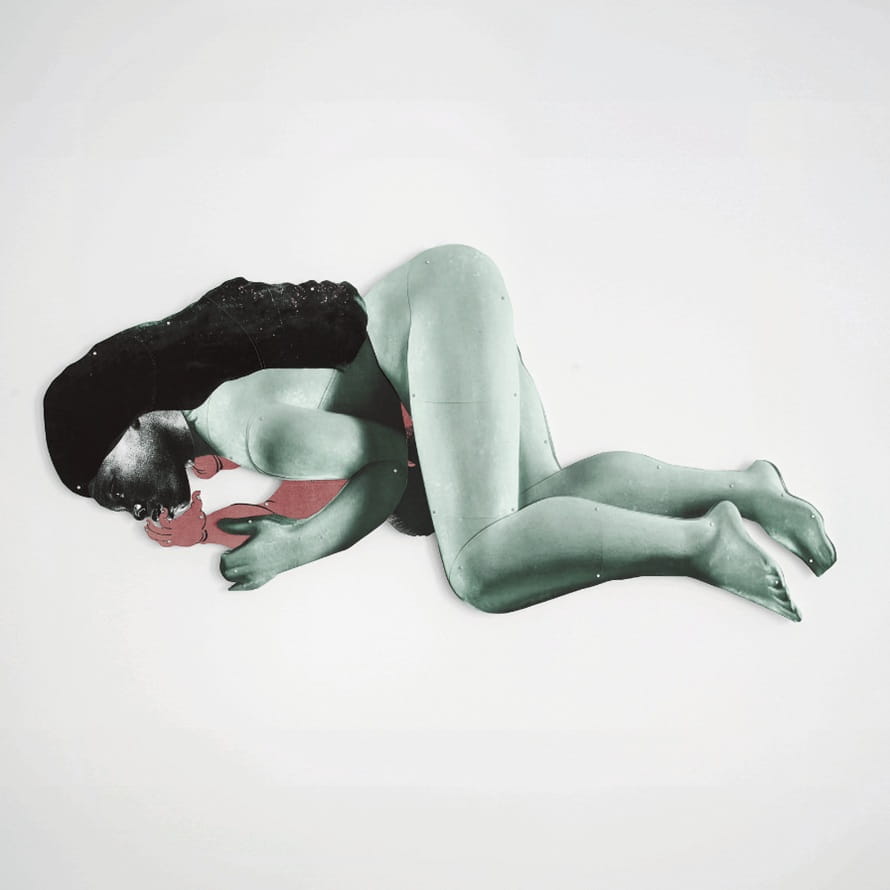
Frida Orupabo, Daughter, 2026, collage: pigment print on acid-free cotton paper, 95 x 208 cm, Photo Matthias Lindner
Benjamin Orlow’s anti-heroic works combine classical sculpture with mythology, presenting the human body as a site of continuous transformation. His composite sculpture Ritual City forms the spatial and conceptual anchor of the exhibition. Fragmented figures in ceramic and plaster caught between formation, and dissolution on a scaffolding, gradually merging with it. They transition into alien forms that can no longer be separated from the structure. The visible deformation points to a process of transformation whose beginning and end can no longer be determined.
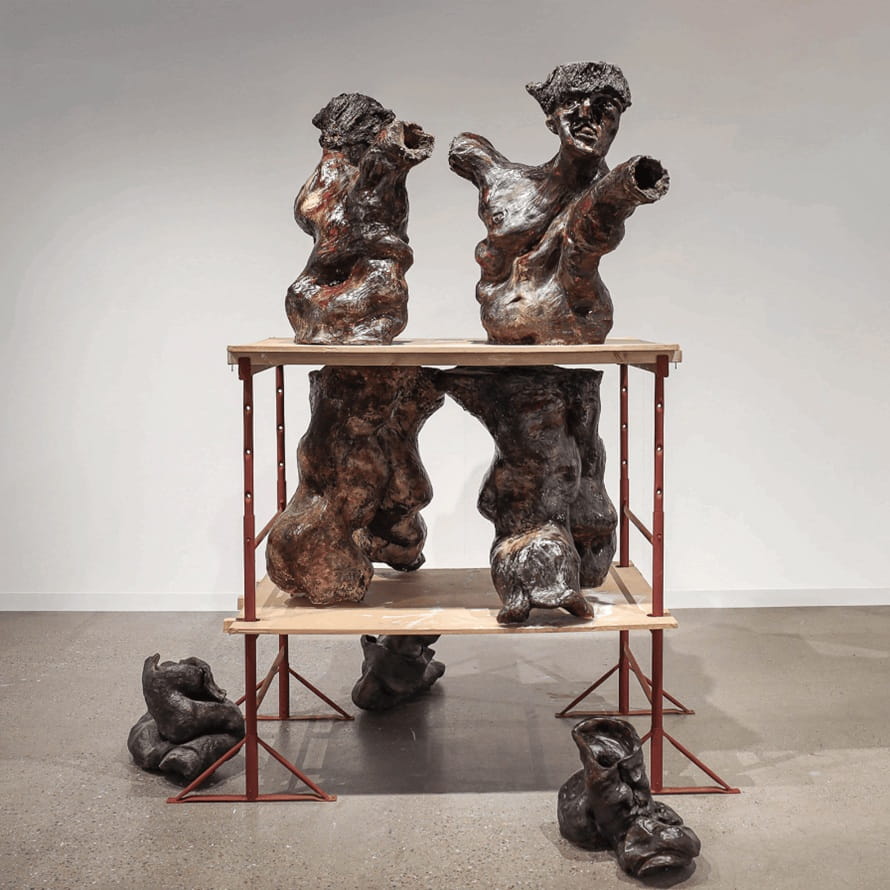
Benjamin Orlow, Ritual City, 2026, plaster, ceramic, wood, 255 x 250 x 200 cm, Photo: Chloe Alyshea
Edvard Munch likewise presents the body as an unstable entity. His figures seem to deform under the influence of psychological states; their contours dissolve and merge with the space surrounding them. The lithograph Vampyr II, on view in the exhibition, was created in 1895 after the original version of 1893, which Munch first exhibited in Berlin under the title Love and Pain. He adopted the work’s current title from his friend and writer Stanisław Przybyszewski. Munch depicts two closely intertwined figures, one bending over the other and placing their mouth against the other’s neck. It is only the title that reveals what is depicted, creating an ambiguity between intimacy and threat.
Sophie Reinhold’s painting questions established pictorial conventions by unsettling familiar iconographies and materials. Marble dust incorporated into the pigment lends the works a sculptural quality and makes materiality itself the subject of her investigation. In her new body of work, she pours the enriched paint onto the canvas, subsequently covers it with layers of filler and sands it down, partially exposing it once again, thereby freezing the physical process of painting. Sanding thus becomes an act of preservation: by removing the surface, Reinhold preserves the dynamic gesture of her process and allows it to emerge retrospectively, merged with the other elements of the image.
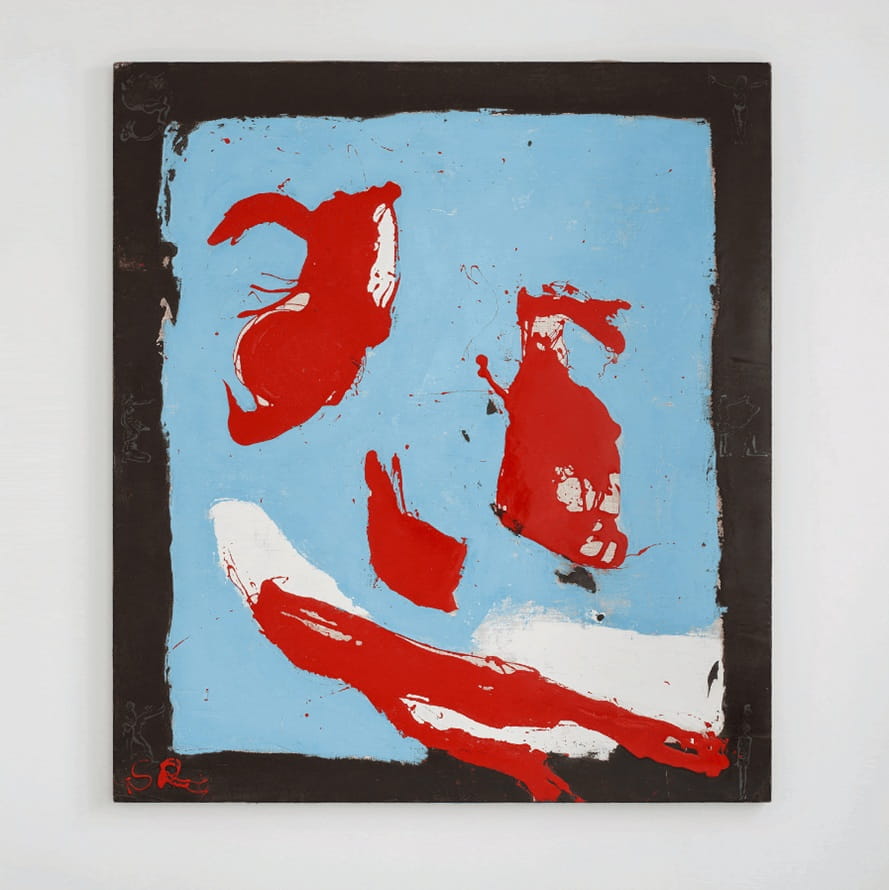
Sophie Reinhold, STRIKE, 2026, oil on pigmented marble powder on jute, 160 x 180 cm, Photo Matthias Lindner
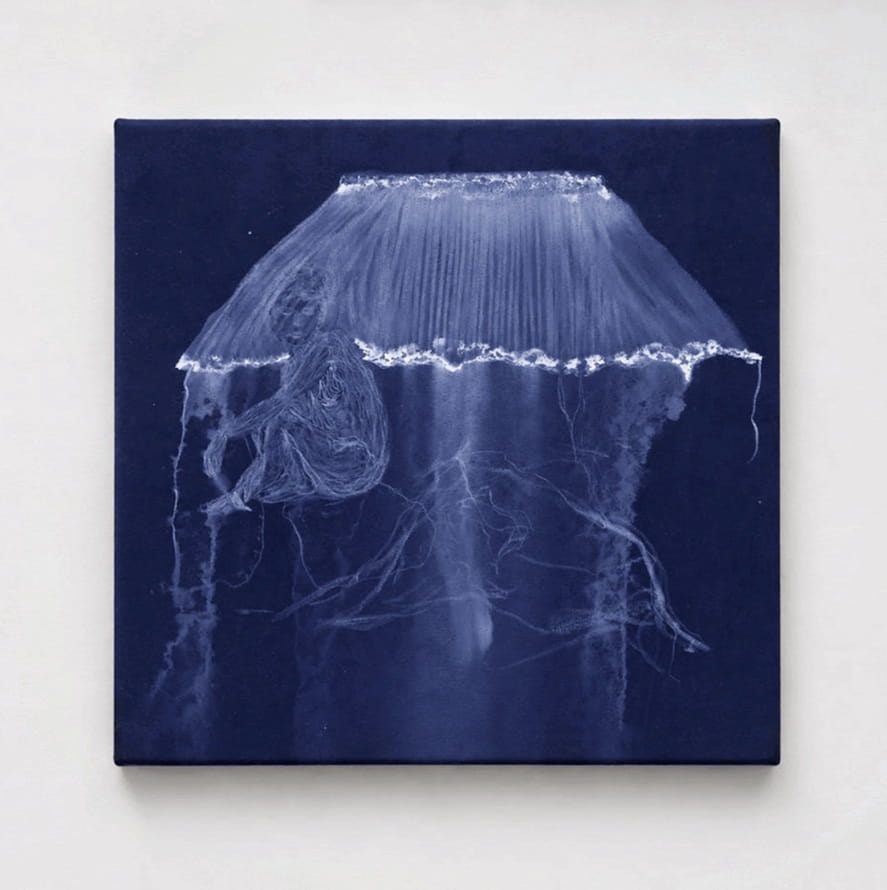
In the works of Mamma Andersson and Michael Schmidt, space becomes an expression of memory and inner experience. Andersson transforms familiar interiors and landscapes into uncanny, psychological pictorial spaces. Memory and lived experience become perceptible through subtle shifts in color, composition, and light, pointing to realities that resist immediacy. In his renowned series Waffenruhe, Michael Schmidt transforms the city into a psychological landscape in which memory, history, and political division remain permanently inscribed into the urban fabric. Through the grouping of the photographs on the wall, he emphasizes the empty space as a significant part of what is depicted. Alex Müller similarly understands the past as an active space of thought and image-making. In her ink paintings, she draws on the photographic estate of Ernst Ludwig Kirchner not as a template, but as a catalyst. Her white ink paintings on indigo velvet become condensations of time, opening up an ongoing dialogue between past and present.
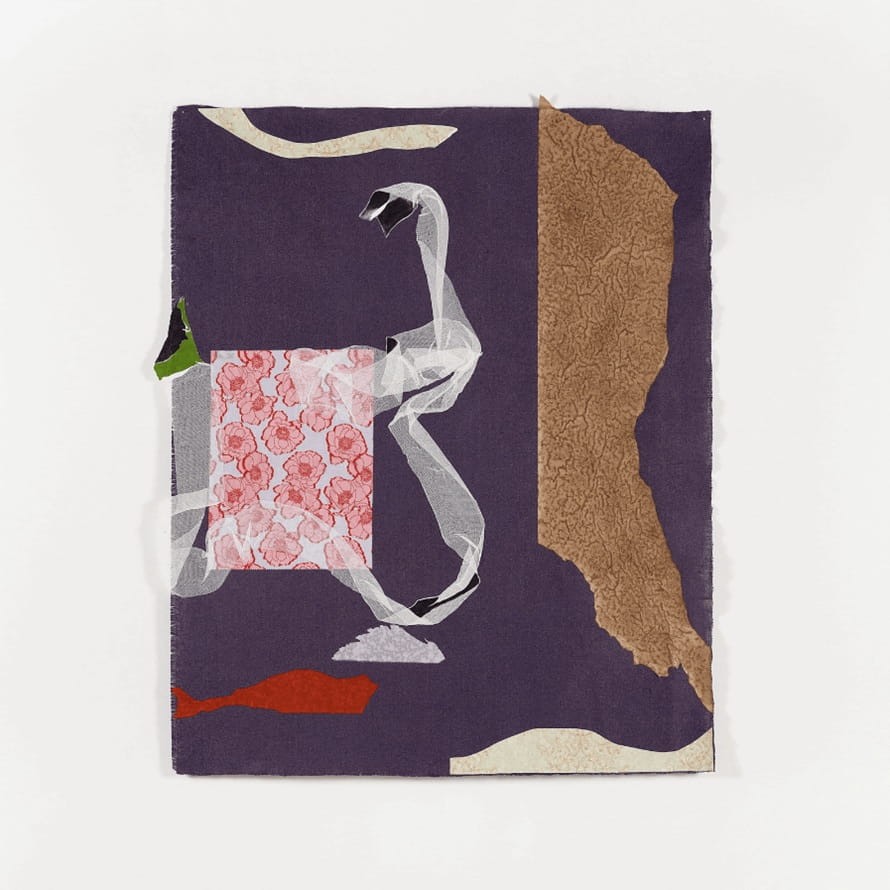
Francis Offman, Untitled, 2025, acrylic, ink, paper, fabric, coffee grounds, 100% cotton gauze, Bolognese plaster on jute, 135.5 x 109.5 cm, Photo Carlo Favero
What we see in Symptoms is both strange and familiar. Do we see, as in John Coplans’s work, a fragmented, aging, naked body, or does it transform into a new form that can be perceived but not clearly named? Frida Orupabo, too, disassembles and reassembles photographs of Black bodies, exposing the violence inscribed in hegemonic visual traditions. She goes beyond the representation of a symptom by making the underlying structures visible, exposing them, and countering them with her own resistant figures. Where Orlow, Kozinets, and Coplans dissolve the body’s legibility, Orupabo reveals what has itself been concealed and repressed within historical images.
Vernissage: Thursday, 10. September 2026, 6 – 10 pm
Exhibition period: Friday, 11. September – Saturday, 24. October 2026
Opening hours during Berlin Art Week:
Friday, September 11 – Sunday, September 13, 11 am – 6 pm
Image caption: Alex Müller, Die Fidschinacht, 2016, ink on velvet, 37.5 x 41 cm, Courtesy of the artist & Haverkamp Leistenschneider Berlin
Exhibition SYMPTOMS – Galerie Nordenhake Berlin | Zeitgenössische Kunst in Berlin | Contemporary Art | Exhibitions Berlin Galleries | ART at Berlin